
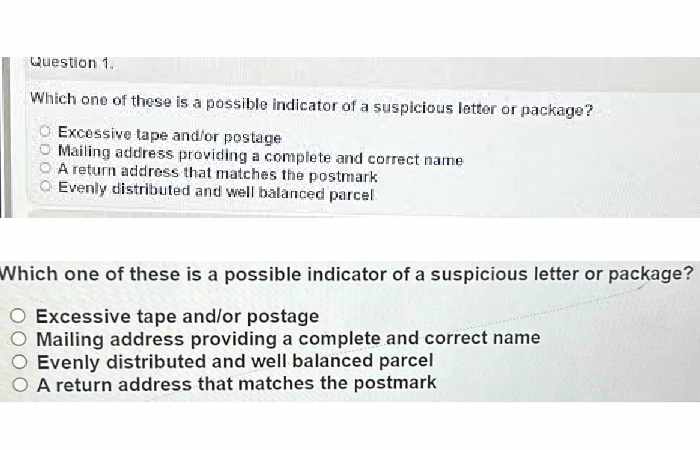
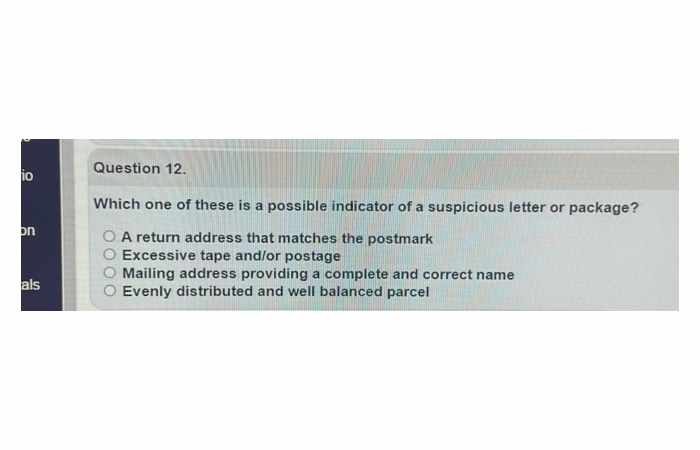
In the United States, countless letters and packages pass through the postal system each day. While most mail contains harmless items, there have been numerous incidents in which suspicious and/or dangerous packages were mailed, making this a real concern. That being said, which one of the following is a possible indicator that the letter or package is suspicious:
Knowing the answer can be extremely beneficial not only to you but to all in your workplace or home and throughout the United States as awareness is key. No matter whether it be to your house in person or by mail, to your workplace, or to your home-based e-commerce store, early recognition of warnings signs can prevent major accidents from happening.
This in-depth guide discusses everything you’ll ever need to know about suspicious mail, ranging from visual warnings to behavior signs to past incidents and procedures to use should you come into contact with any suspicion mail.
Why Mail Safety Matters in the United States
There are always threats involving mail-based items throughout the U.S. But few become an incident. There have been several true incidents involving mailed dangerous substances or explosives which were successfully delivered and ended in injuries, evictions, or widespread fear.
According to federal safety agencies:
- Thousands of suspicious mail reports are investigated annually in the U.S.
- It should also be noted that not all of these will result in incidents as many can be false alarms but all are of an extreme threat to life itself and should be taken as seriously as any actual danger.
- If they can be caught in a timely fashion then damage could potentially be less or nonexistent depending on the circumstances.
In an age where nearly everyone is receiving online deliveries daily, this awareness is increasingly important.
Common Indicators of Suspicious Letters or Packages
Of the following, which would be an indicator that a letter or package is suspect: More than one of them is an indicator.
Some warning signs are:
-
Unexpected or Unknown Sender
One of the most frequent red flags is receiving a package from someone you don’t recognize.
Warning signs include:
- No return address
- A return address that doesn’t match the sender’s name
- A vague or generic sender label
If you didn’t expect a delivery it’s worthwhile stopping for a moment before you open it.
-
Excessive Postage or Unusual Shipping Labels
Suspicious packages often have irregular postage patterns.
Look for:
- Excessive stamps instead of printed postage
- Handwritten labels instead of professional shipping labels
- Misspelled words or incorrect titles
These can indicate attempts to avoid standard tracking or screening procedures.
-
Strange Odors or Leaks
A strong or unusual smell is a serious warning sign. (OSHA)
Examples include:
- Chemical or acidic odors
- Almond-like smell (sometimes associated with toxic substances)
- Oily stains or discoloration on the packaging
Any traces of powders and leakages are to be treated as potentially toxic.
-
Excessive Weight or Uneven Distribution
Packages that feel “off” when handled should raise suspicion.
Indicators include:
- Heavier than expected for its size
- Uneven weight distribution
- Rigid or bulky feel in an envelope
These could suggest hidden components or materials.
-
Protruding Wires or Aluminum Foil
This is one of the most serious warning signs.
Watch for:
- Wires sticking out
- Ticking sounds (rare but possible)
- Visible metal or foil
These could indicate mechanical or electronic devices.
-
Restrictive Markings or Urgent Language
Suspicious packages often use psychological tactics.
Examples:
- “Urgent,” “Confidential,” or “Do Not X-Ray”
- Threatening messages
- Instructions to open immediately
These markings are designed to create panic or bypass normal caution.
-
Poor Packaging or Excessive Tape
Unusual packaging can be a clear indicator.
Look for:
- Excessive tape or string
- Improvised wrapping materials
- Sealed in an unusual way
Legitimate packages are typically professionally packed.
Visual Warning Signs: Quick Comparison Table
| Indicator | Normal Package | Suspicious Package |
| Return Address | Clear and accurate | Missing, fake, or mismatched |
| Weight | Matches expected contents | Too heavy or uneven |
| Packaging | Professional and secure | Excessive tape, poor wrapping |
| Odor | None or neutral | Chemical, strange, or strong smell |
| Labeling | Printed and accurate | Handwritten, misspelled |
| Markings | Standard shipping info | “Urgent,” “Confidential,” or threatening |
| Physical Features | Smooth and uniform | Wires, bulges, or leaks |
What to Do If You Receive a Suspicious Package
Recognizing a suspicious package is only half the equation. Knowing how to respond is critical.
Immediate Steps to Take
- Do NOT open the package
- Do NOT shake or move it unnecessarily
- Place it gently on a stable surface
- Isolate the area
- Wash your hands thoroughly
Notify Authorities
In the United States, you should contact:
- Local law enforcement
- Building security (if in an office)
- Emergency services (if there is immediate danger)
If the package involves mail services, report it to the U.S. Postal Inspection Service.
If You’ve Already Opened It
If you accidentally opened a suspicious letter or package:
- Avoid touching your face
- Leave the room immediately
- Prevent others from entering
- Wash exposed skin with soap and water
- Seek medical attention if symptoms appear
Real-World Examples and Case Studies
Case Study 1: Suspicious Powder Letters
A suspicious letter or package has been mailed to offices containing unidentified powders.
Outcome:
- Buildings were evacuated
- Hazmat teams responded
- Most cases were hoaxes—but treated as real threats
Lesson: Even harmless-looking powder must be taken seriously.
Case Study 2: Improvised Explosive Devices (IEDs)
There have been cases where packages contained explosive components disguised as ordinary deliveries.
Common traits included:
- Excessive postage
- Strange wiring
- Fake return addresses
Lesson: Physical abnormalities are often the biggest clues.
Case Study 3: Workplace Mailroom Incident
A corporate mailroom flagged a package due to:
- Incorrect labeling
- Strong odor
- Uneven weight
Result:
- The incident was confirmed as dangerous and authorities identified the hazardous material
- Due to early detection of the warning signs there was no risk of exposure
A lesson: Knowing this will save lives.
Warning Tips to Keep Homes and Workplaces Safe
Individuals
- Only accept packages you are expecting
- Verify sender information
- Avoid opening suspicious items alone
- Install security cameras for deliveries
Businesses
- Train employees on mail safety protocols
- Establish a designated mail handling area
- Use protective equipment when necessary
- Implement screening procedures
Remote Workers
With more Americans working from home:
- Be cautious with unexpected deliveries
- Separate personal and business packages
- Report suspicious items immediately
Expert Insights and Safety Statistics
Security experts emphasize that awareness is the first line of defense.
Key insights:
- Most dangerous packages show multiple warning signs
- Human intuition plays a significant role
- Training reduces response time by up to 60%
Statistics:
- Over 90% of reported suspicious packages turn out non-threatening
- However, every report is treated as potentially hazardous
- Early reporting significantly lowers risk exposure (FBI)
Conclusion: Stay Alert, Stay Safe
Therefore, of the following, which would be an indicator that a letter or package is suspect: The one that appears to be one of the many warning signs that are out there today. As I have stated before, suspicious packages normally possess one or more indicators from the below list.
It should be remembered that although each one may indicate a potential suspicious package, awareness of these common signs can also potentially prevent personal safety issues, workplace incidents, and the potential risk to all citizens of the United States. The ability to see even one warning sign can prevent major harm from being done. Whether at work or home, this awareness is increasingly important.
Actionable Takeaways:
- Always verify the sender before opening mail
- Look for multiple warning signs—not just one
- Never ignore unusual features
- Report suspicious items immediately
- Educate others around you
The responsibility of secure mail practices must be shared. One small, 3-5 second, moment of precaution can make a world of difference.